ISO consultants since 2001 · working across Bulgaria · consultants in 10 cities

Call Consultation Email
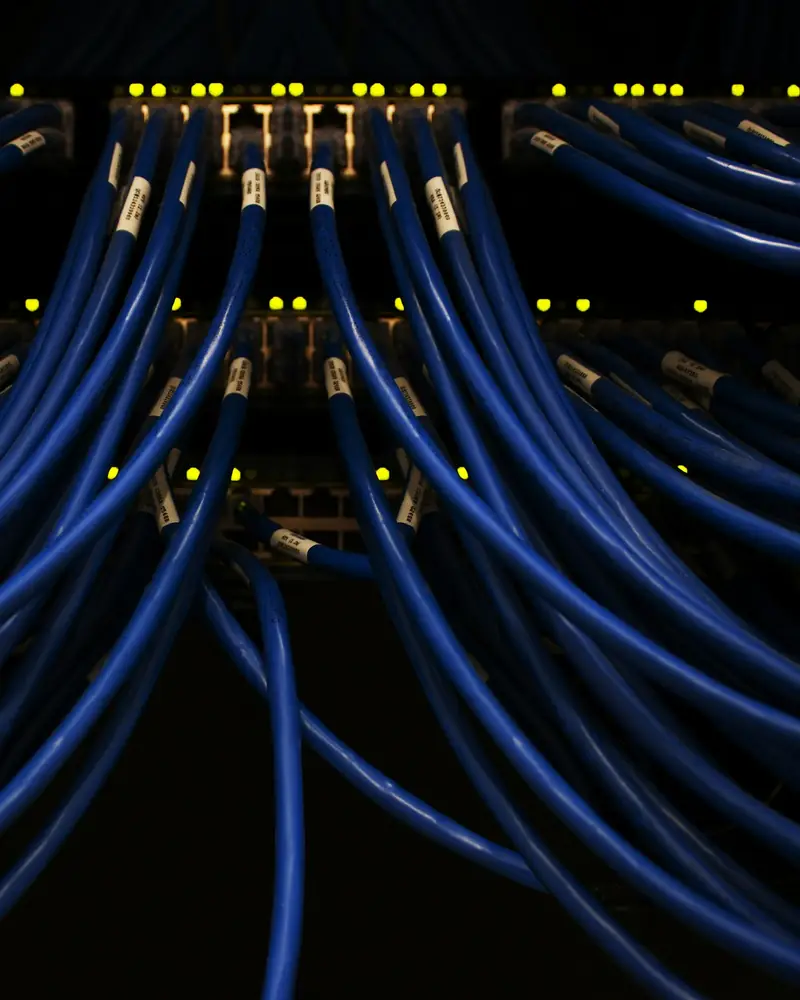
Network cables connected to a switch in a server room

Standards · Security and resilience

NIS2 - cybersecurity is now a management responsibility

The amended Cybersecurity Act transposes NIS2 into Bulgarian law: more sectors, specific measures, short deadlines for reporting incidents and personal liability for management. We help you check whether you are in scope and meet the requirements - step by step.

Guide

NIS2 - the essentials, in brief

NIS2 is the European Union directive on a high common level of cybersecurity - Directive (EU) 2022/2555. In Bulgaria it was transposed by the Act amending and supplementing the Cybersecurity Act, promulgated in State Gazette No. 17 of 13 February 2026.

The law requires essential and important entities in the listed sectors to apply cybersecurity risk management measures, to report significant incidents within short deadlines and to ensure that management is accountable. Non-compliance leads to penalties.

Essential and important entities apply the same measures and have the same reporting obligations. The difference lies in supervision and penalties: essential entities are also subject to inspections in advance, while important entities are supervised mainly after a report or an incident.

Who is NIS2 for

Medium-sized and large organisations in the sectors listed in the annexes are covered - and some smaller ones by exception:

  • Energy, transport and water supply
  • Banks and financial market infrastructure
  • Healthcare and the manufacture of pharmaceuticals
  • Digital infrastructure and IT services
  • Postal and courier services, waste management
  • Manufacture of food, chemicals and machinery

What NIS2 requires

The measures cover policies on risk analysis and information system security, incident handling, business continuity and crisis management, supply chain security, security in the acquisition and development of systems, assessment of effectiveness, cyber hygiene and training, cryptography, personnel security and access control, and multi-factor authentication.

A significant incident is one that has caused or may cause serious disruption to services or financial losses, or considerable damage to others. Such incidents are reported in stages: an early warning within 24 hours, an incident notification within 72 hours and a final report within one month.

Management approves the measures, oversees their implementation and undergoes training at least once every two years; employees are trained regularly.

The benefits

Complying with the law protects you from penalties: for essential entities up to €10 million or 2% of worldwide annual turnover, for important entities up to €7 million or 1.4% - whichever amount is higher. Members of management can also be fined personally, and for essential entities a temporary ban on exercising management functions is possible.

Beyond the law, the measures reduce the real risk of attacks, data leaks and disruption. ISO/IEC 27001 is the most direct route to them and provides evidence for clients and regulators.

How implementation works

  1. Scope checkWhether the organisation falls under the law - sector, size and type of entity - and registration in the register of entities.
  2. Gap analysisA comparison of the current measures with the requirements of the law and its implementing ordinance.
  3. Risk assessmentThe cyber risks to systems, data and suppliers.
  4. Measures and policiesThe 10 groups of measures - policies, procedures and technical solutions.
  5. Reporting and trainingAn incident procedure for the 24 h / 72 h / 1 month deadlines, and training for management.
  6. Review and improvementInternal audit, assessment of effectiveness and an improvement plan.

What you get

  • Written assessment of whether you are in scope
  • Gap analysis against the law
  • Cyber risk assessment
  • Policies and procedures for the 10 measures
  • Incident reporting procedure
  • Business continuity plan
  • Trained management and staff
  • Roadmap to ISO/IEC 27001

Questions and answers

Frequently asked questions

Cannot find your answer? Call us - a consultant will reply today.

Baltov ConsultA consultant replies within the working day

Hello! Pick a question - or ask us directly. The first consultation is free.

Which organisations are covered by NIS2?

Medium-sized and large enterprises in 18 sectors - among them energy, transport, healthcare, water, digital infrastructure, food, manufacturing, waste, postal services and digital service providers. Some entities are in scope regardless of their size - for example DNS service providers, top-level domain name registries, trust service providers and administrative authorities.

What is the difference between an essential and an important entity?

The measures and the reporting obligations are the same. The difference lies in supervision and penalties: essential entities are also subject to inspections in advance, while important entities are supervised mainly after a report or an incident. Fines for essential entities are up to €10 million or 2% of worldwide annual turnover, and for important entities up to €7 million or 1.4%.

What are the deadlines for reporting an incident?

For a significant incident: an early warning within 24 hours, an incident notification within 72 hours and a final report within one month. We help you build a procedure so that your team knows what to report, when and to whom.

Is ISO/IEC 27001 certification mandatory?

No, the law does not require a certificate. However, ISO/IEC 27001 covers a large part of the NIS2 measures and is the most structured way to put them in place and demonstrate that they work.

What are the penalties?

For essential entities, from €25,000 to €10 million or 2% of worldwide annual turnover (whichever is higher); for important entities, from €12,500 to €7 million or 1.4%. Members of management are personally liable, with fines from €500 to €5,000.

When do the requirements apply?

The amended Cybersecurity Act was promulgated in the State Gazette, No. 17 of 13 February 2026. The requirements already apply, so it is advisable to start the scope check and the gap analysis as soon as possible.

Do we have to register anywhere?

Yes - entities covered by the law are entered in the register in accordance with the procedure set out in the law. We check whether your organisation falls within the scope and what exactly it needs to submit.

Does an ISO/IEC 27001 certificate cover everything?

It covers a large part, but not everything. Some requirements - for example the reporting deadlines and the responsibility of management - are checked separately against the law.

How much does the preparation cost?

It depends on the size of the organisation, its systems and the measures already in place. We set the price after the free initial assessment and state it in our proposal.

Free consultation

NIS2 for your company

Tell us about your company - a consultant will contact you within the working day and propose a plan, timeline and price.

What happens next

  1. You send the enquirytakes less than a minute
  2. A consultant calls youwithin the working day
  3. Free initial assessmentno commitment
  4. Offer with price and timelineclear, before we start

Consultation enquiry

Step 1 of 3

What do you need?

Choose one or more - or “Other”.

About your company

Number of employees

How can we reach you?