ISO consultants since 2001 · working across Bulgaria · consultants in 10 cities

Call Consultation Email
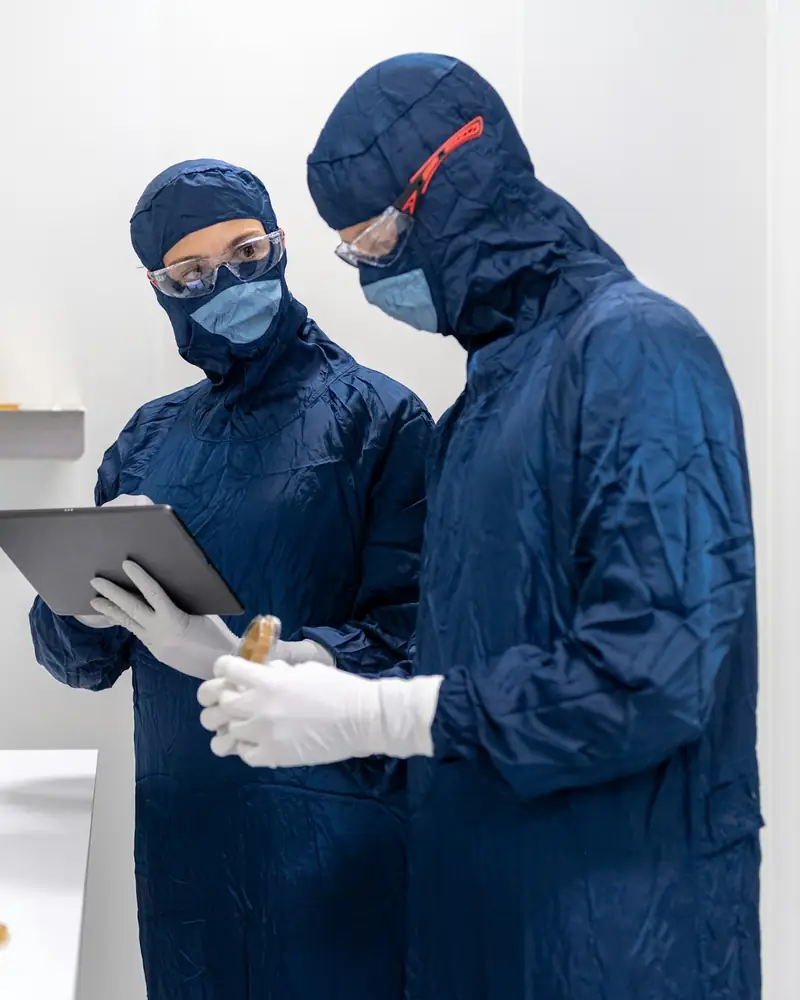
Two employees wearing masks and gloves in a cleanroom

Standards · Quality

ISO 13485 - quality that patients depend on

The quality management system for medical devices brings order to design, production, sterilisation, traceability and post-market surveillance - so that it meets the MDR and the requirements of markets outside the EU.

Guide

ISO 13485 - in brief

ISO 13485 is the international standard for quality management systems for medical devices. It sets out the requirements for organisations that design, manufacture, install, service or distribute medical devices - so that the devices are safe and meet regulatory requirements.

The current version is ISO 13485:2016. The standard is the basis of the quality system required by the Medical Devices Regulation (EU) 2017/745 (MDR), the In Vitro Diagnostic Medical Devices Regulation (IVDR) and, since 2 February 2026, the FDA requirements in the USA (QMSR). The certificate is issued by an independent accredited certification body; Baltov Consult is a consultant - we prepare your system and your team for the audit and for the assessment by the notified body.

Who is ISO 13485 for

The standard is for everyone in the medical device chain:

  • Medical device manufacturers
  • Manufacturers of in vitro diagnostic medical devices
  • Manufacturers of components and materials
  • Sterilisation and packaging companies
  • Importers and distributors of medical devices
  • Service companies for medical equipment

What ISO 13485 requires

The standard puts regulatory requirements at the centre: risk management throughout the life cycle (according to ISO 14971), control of design and development, process validation - for example of sterilisation - cleanrooms and contamination control, and traceability and identification of devices. Design must be planned and documented, and every step checked: verification confirms that the design outputs meet the design inputs, validation confirms that the device meets the needs of the user, and design transfer hands the project over to production. All records are collected in the project file - the first thing the auditor and the notified body ask to see.

Also required are supplier management, complaint handling and post-market surveillance, incident reporting, corrective and preventive action, technical documentation and detailed records - more documented procedures than in ISO 9001. Behind every line on the label there is a process in the system: the manufacturer’s details, the unique device identifier (UDI), the batch number and expiry date that allow the affected devices to be traced and recalled, the sterilisation method, the instructions for use and the CE marking.

The benefits

Without an ISO 13485 system, a device will struggle to reach the market: the system is the basis for conformity assessment under the MDR and IVDR and for markets such as the USA, Canada and the MDSAP countries. Under the MDSAP programme, a single audit covers the requirements of the USA, Canada, Brazil, Australia and Japan. The higher the risk class of the device, the stricter the assessment - from a declaration of conformity by the manufacturer for class I devices (with a notified body involved for sterile devices, devices with a measuring function and reusable surgical instruments) to the strictest assessment for class III, covering the quality system, the documentation for each device and the clinical data.

For patients and doctors, the system means safe devices; for the manufacturer, it means fewer complaints and recalls, smoother audits by notified bodies and regulators, and well-organised technical documentation.

How implementation works

  1. Gap analysisWe compare your system, devices and documentation with ISO 13485 and the regulatory requirements.
  2. Risk managementA risk management file according to ISO 14971 for each device.
  3. Processes and validationDesign, production, sterilisation, cleanrooms and process validation.
  4. Traceability and surveillanceUDI, complaints, post-market surveillance and incident reporting.
  5. Training and internal auditWe train your team and check the system in operation.
  6. Certification auditWe prepare your organisation for the audit by the certification body or notified body.

What you get

  • A quality management system to ISO 13485:2016
  • Risk management files
  • Design and validation procedures
  • A traceability and UDI system
  • Procedures for complaints and post-market surveillance
  • Supplier management
  • A trained team and internal auditors
  • Preparation for the certification audit

How we work

Six steps to ISO 13485 certification

The certificate is issued by an independent accredited certification body that you choose. We prepare you for it - step by step.

  1. 1

    Step 01

    Free first conversation

    We learn about your business, goals and deadlines - no commitment.

    A clear picture of what you need

  2. 2

    Step 02

    Analysis and offer

    We assess what you already have and propose a plan, timeline and clear price.

    An offer with price and timeline

  3. 3

    Step 03

    Building the system

    We develop the procedures and documents together with your team.

    The documents of the system

  4. 4

    Step 04

    Training

    We train management, staff and internal auditors.

    Internal auditor certificates

  5. 5

    Step 05

    Internal audit

    We check the system and fix weaknesses before certification.

    Internal audit report

  6. 6

    Step 06

    Certification audit

    We stand by you during the audit by the certification body you choose.

    Certificate from an accredited body

Start with a free conversation

Questions and answers

Frequently asked questions

Cannot find your answer? Call us - a consultant will reply today.

Baltov ConsultA consultant replies within the working day

Hello! Pick a question - or ask us directly. The first consultation is free.

What is ISO 13485?

An international standard for quality management systems for medical devices. It is applied by manufacturers, suppliers of components and services, sterilisation companies, distributors and service companies - throughout the life cycle of the device.

Is ISO 13485 mandatory?

The MDR requires every manufacturer to have a quality management system. ISO 13485 is the most direct and widely recognised way to build one and to demonstrate conformity to the notified body and to regulators outside the EU.

What are the deadlines for the transition to the MDR?

Under Regulation (EU) 2023/607, devices covered by the old directives may be placed on the market until 31 December 2027 (class III and class IIb implantable devices, with exceptions) or until 31 December 2028 (all others), provided that the manufacturer has a quality system in line with the MDR, has submitted an application and has signed an agreement with a notified body.

Is there a new edition of ISO 13485?

The 2016 edition has been confirmed and remains in force. Since 2 February 2026 the FDA has also used it as the basis of its quality system requirements.

How does ISO 13485 relate to ISO 14971?

ISO 13485 requires risk management throughout the life cycle, and ISO 14971 describes exactly how to do it - analysis, evaluation, control and monitoring of risk. We build the two together.

How long does implementation take?

It depends on the class of your devices, whether you carry out design yourselves, your processes (for example sterilisation) and the documentation you already have. We set the exact timescale after the free initial assessment.

How does the certification audit work?

In two stages: first a review of the documentation and of your readiness, then an on-site audit. The certificate is valid for three years, with annual surveillance audits.

How does it differ from ISO 9001?

ISO 13485 focuses on device safety and regulatory requirements: it requires more documented procedures, risk management, process validation and post-market surveillance, and its emphasis is on maintaining the system rather than on continual improvement and customer satisfaction.

How much does implementation cost?

The price depends on the size of the organisation, the number of sites and the system already in place. We determine it after the free initial assessment and state it in our proposal together with the timescale.

Free consultation

ISO 13485 for your company

Tell us about your company - a consultant will contact you within the working day and propose a plan, timeline and price.

What happens next

  1. You send the enquirytakes less than a minute
  2. A consultant calls youwithin the working day
  3. Free initial assessmentno commitment
  4. Offer with price and timelineclear, before we start

Consultation enquiry

Step 1 of 3

What do you need?

Choose one or more - or “Other”.

About your company

Number of employees

How can we reach you?