ISO consultants since 2001 · working across Bulgaria · consultants in 10 cities

Call Consultation Email
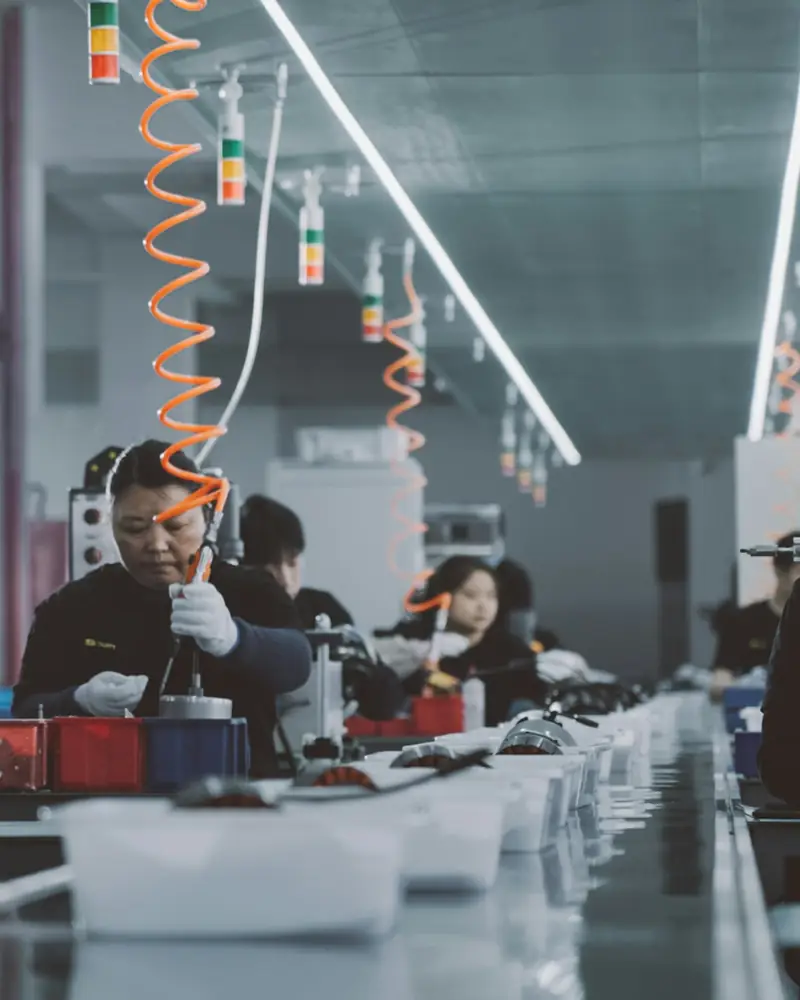
Staff on a packing line in a food factory

Standards · Food safety

BRCGS - an AA grade from the very first audit

British and many European retailers require their suppliers to hold BRCGS certification. We prepare your production, documents and team so that you pass the audit with a high grade - and keep it.

Guide

BRCGS - in brief

BRCGS is a family of global standards for the safety of food, packaging, storage and consumer products, recognised by GFSI. The most widespread is Food Safety - required by a large share of retailers in the United Kingdom and by many buyers in Europe and around the world. There is a standard for every link in the chain, from production and packaging to the warehouse and the trader.

The current version of Food Safety is Issue 9; BRCGS is developing Issue 10. The audit ends with a grade from AA to D, depending on the number and severity of nonconformities, and a '+' sign (for example AA+) shows that the audit was unannounced. With a critical nonconformity or too many major ones, no certificate is issued. The certificate is issued by an independent certification body after an audit; Baltov Consult is a consultant.

Who is BRCGS for

BRCGS standards cover the whole supply chain:

  • Food manufacturers - Food Safety
  • Packaging manufacturers - Packaging Materials
  • Warehouses and transport - Storage & Distribution
  • Traders and intermediaries - Agents & Brokers
  • Manufacturers of non-food products - Consumer Products
  • Suppliers to British retailers

What BRCGS requires

At the heart of Food Safety are the fundamental requirements: senior management commitment, the food safety plan (HACCP), internal audits, supplier management, corrective and preventive actions, traceability, site layout and product flow, hygiene and cleaning, allergen management, operational control, labelling and packaging control, and training. A serious nonconformity against a fundamental requirement means that no certificate is issued.

The standard also requires a plan to develop food safety culture, protection of food against deliberate contamination, a vulnerability assessment for food fraud, and detailed requirements for premises, equipment and personnel. Evidence that nonconformities have been corrected must be provided within 28 days of the audit.

The benefits

The certificate opens the door to retailers in the United Kingdom and to buyers who require a GFSI standard. A high grade - AA or A - means less frequent scrutiny from customers and a stronger position in negotiations. Our aim is AA: no more than five minor nonconformities.

The fundamental requirements focus effort where the risk is greatest, and food safety culture makes the system part of everyday work, not just of the documents. We help you measure that culture - for example with a short staff survey - and plan the next steps.

How implementation works

  1. Pre-auditWe check your site and documents against the requirements of the relevant BRCGS standard.
  2. Fundamental requirementsSpecial attention to the requirements on which the certificate depends.
  3. HACCP and prerequisite programmesHazard analysis, hygiene, allergens, product flow and segregation.
  4. Culture and food defenceA culture plan, vulnerability assessment and site protection.
  5. Internal auditA check against all requirements and preparation for the unannounced option.
  6. Certification auditWe support you during the audit and in closing out nonconformities on time.

What you get

  • Gap analysis against BRCGS
  • HACCP plan and prerequisite programmes
  • Fundamental requirements met
  • Allergen management
  • Food safety culture plan
  • Vulnerability assessment and food defence plan
  • Trained staff and internal auditors
  • Preparation for the certification audit

How we work

Six steps to BRCGS certification

The certificate is issued by an independent accredited certification body that you choose. We prepare you for it - step by step.

  1. 1

    Step 01

    Free first conversation

    We learn about your business, goals and deadlines - no commitment.

    A clear picture of what you need

  2. 2

    Step 02

    Analysis and offer

    We assess what you already have and propose a plan, timeline and clear price.

    An offer with price and timeline

  3. 3

    Step 03

    Building the system

    We develop the procedures and documents together with your team.

    The documents of the system

  4. 4

    Step 04

    Training

    We train management, staff and internal auditors.

    Internal auditor certificates

  5. 5

    Step 05

    Internal audit

    We check the system and fix weaknesses before certification.

    Internal audit report

  6. 6

    Step 06

    Certification audit

    We stand by you during the audit by the certification body you choose.

    Certificate from an accredited body

Start with a free conversation

Questions and answers

Frequently asked questions

Cannot find your answer? Call us - a consultant will reply today.

Baltov ConsultA consultant replies within the working day

Hello! Pick a question - or ask us directly. The first consultation is free.

What is BRCGS?

It is a family of global standards for the safety of food, packaging, storage and consumer products, recognised by GFSI. Food Safety is the most widespread - many retailers in the United Kingdom and Europe require it.

How is the grade determined?

By the number and severity of nonconformities found at the audit: from AA (the fewest nonconformities) to D. With a critical nonconformity or too many major nonconformities, no certificate is issued. A '+' sign (for example AA+) means the audit was unannounced.

What is the current version?

The current version of Food Safety is Issue 9. BRCGS is developing Issue 10 - we will let you know when it is published and the transition deadline is announced.

What is the difference between BRCGS and IFS Food?

Both are recognised by GFSI and aimed at retailers. BRCGS is used more in the United Kingdom, IFS in Germany, France and Italy. The requirements overlap significantly, and the system can be built to meet both.

How quickly must nonconformities be corrected?

Evidence of correction is submitted to the certification body within 28 days of the audit. That is why we prepare the system so that nonconformities are few and easy to close.

How long does preparation take?

It depends on your products, processes and the system already in place - HACCP, ISO 22000 or IFS. We determine the exact timeframe after the free initial assessment and set it out in our proposal.

How long is the certificate valid?

It depends on the grade: with higher grades the audit is annual, with lower grades it is more frequent. The certification body sets the exact schedule according to the grade.

What is an unannounced audit?

It is an audit without a pre-arranged date. A company can choose the unannounced programme, and a '+' is then added to its grade. The system has to be ready every day, not just for a scheduled audit.

How much does implementation cost?

The price depends on your products, processes, sites and the system already in place. We determine it after the free initial assessment and set it out in our proposal together with the timeframe.

Free consultation

BRCGS for your company

Tell us about your company - a consultant will contact you within the working day and propose a plan, timeline and price.

What happens next

  1. You send the enquirytakes less than a minute
  2. A consultant calls youwithin the working day
  3. Free initial assessmentno commitment
  4. Offer with price and timelineclear, before we start

Consultation enquiry

Step 1 of 3

What do you need?

Choose one or more - or “Other”.

About your company

Number of employees

How can we reach you?